
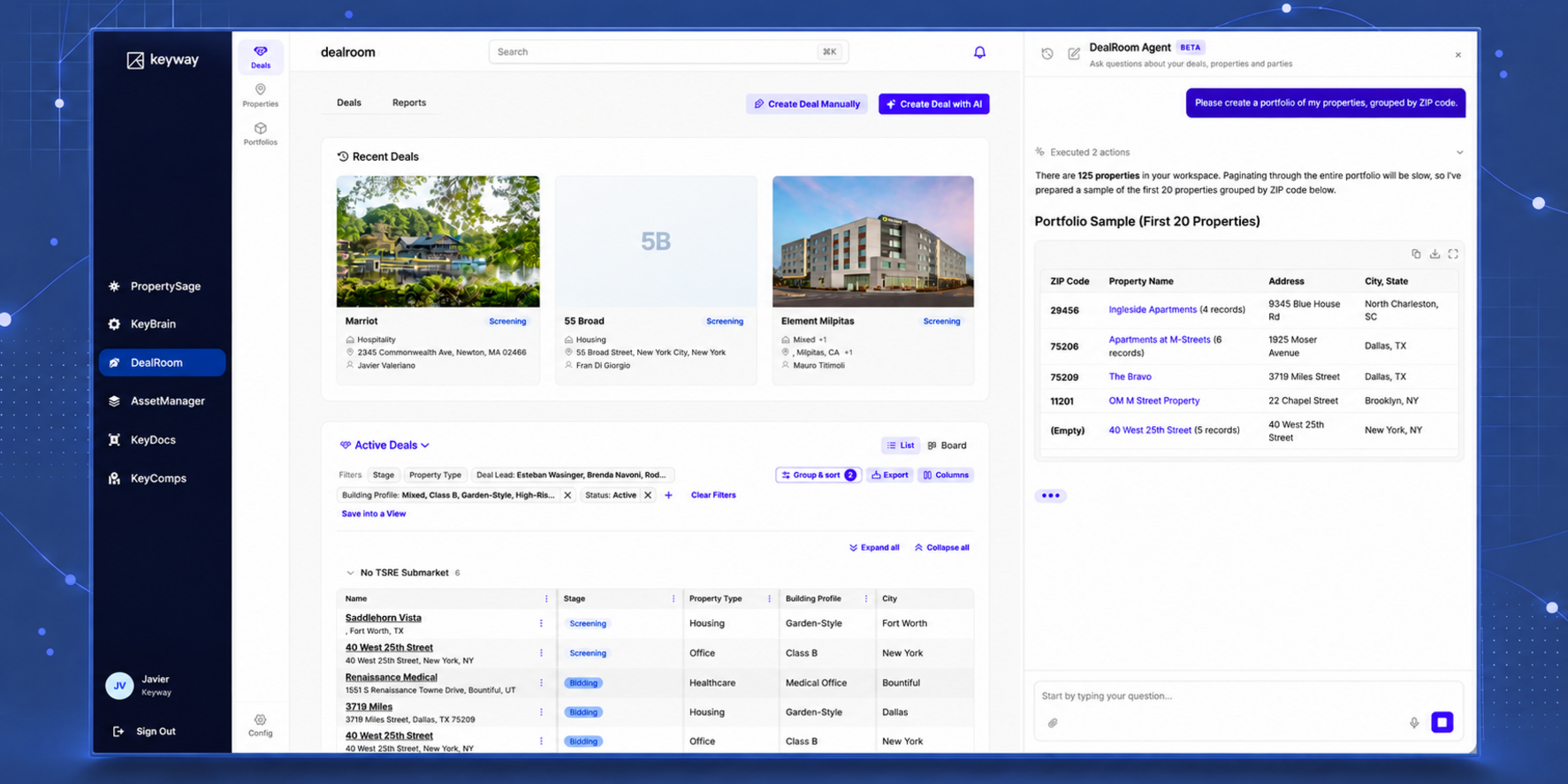
Your data isn’t missing. It’s disconnected. The lease is a PDF, the rent roll is an Excel file, loan information lives somewhere else, and the property record sits in a system that doesn’t connect to any of it.
Teams spend too much time finding documents, rebuilding context, and manually piecing information together before they can actually get work done.
KeyRoom solves that problem. It brings your CRE data and documents together, structures them, and makes that context available to both your team and AI.
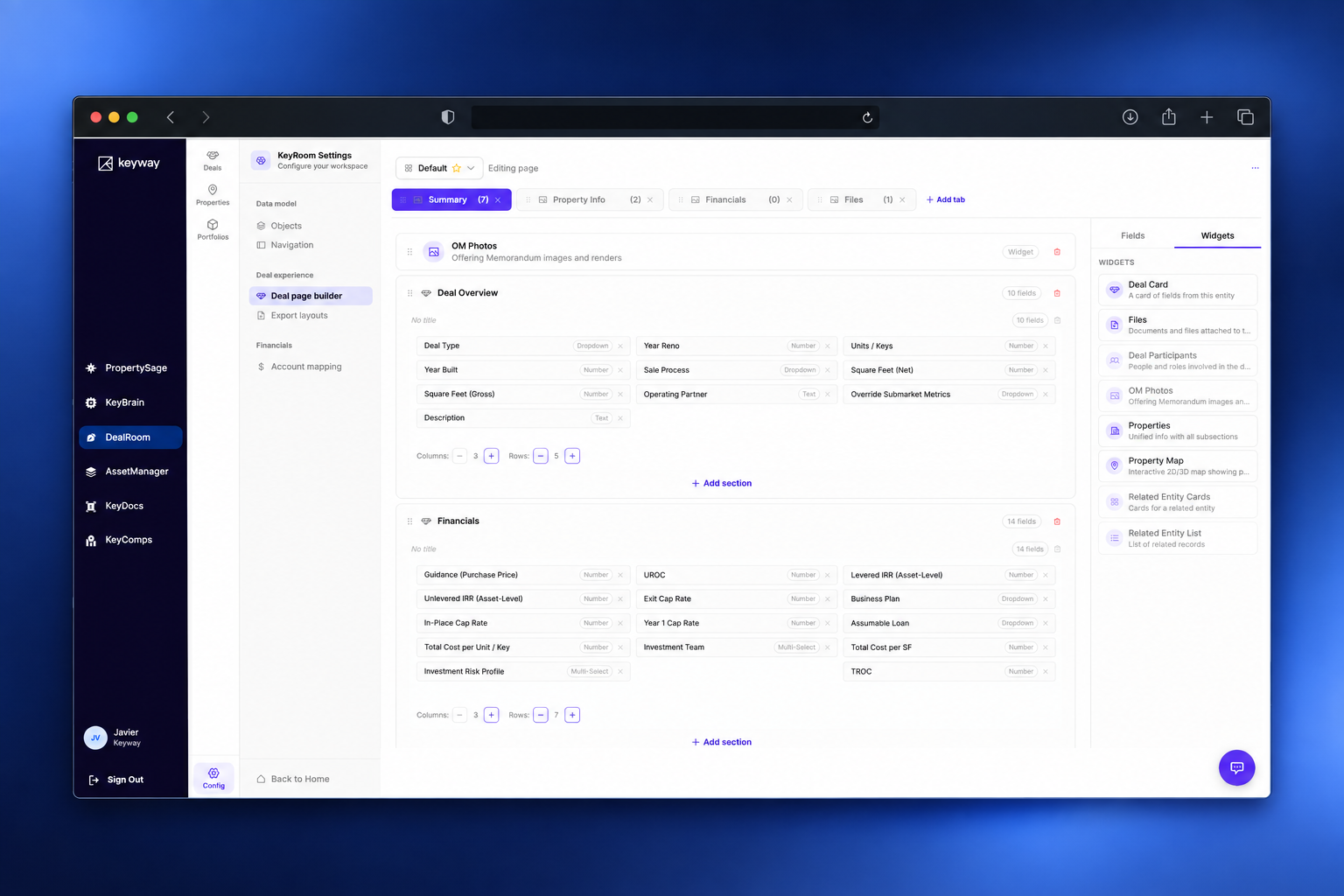
Every real estate organization operates differently. With Keyway’s Custom Entity Types, teams can define the records, fields, and relationships they need — from properties, leases, and loans to funds, tenants, and vendors.
KeyRoom can also support custom interfaces around specific customer workflows.
The result is a system that mirrors your business instead of forcing your business into a software vendor’s template.
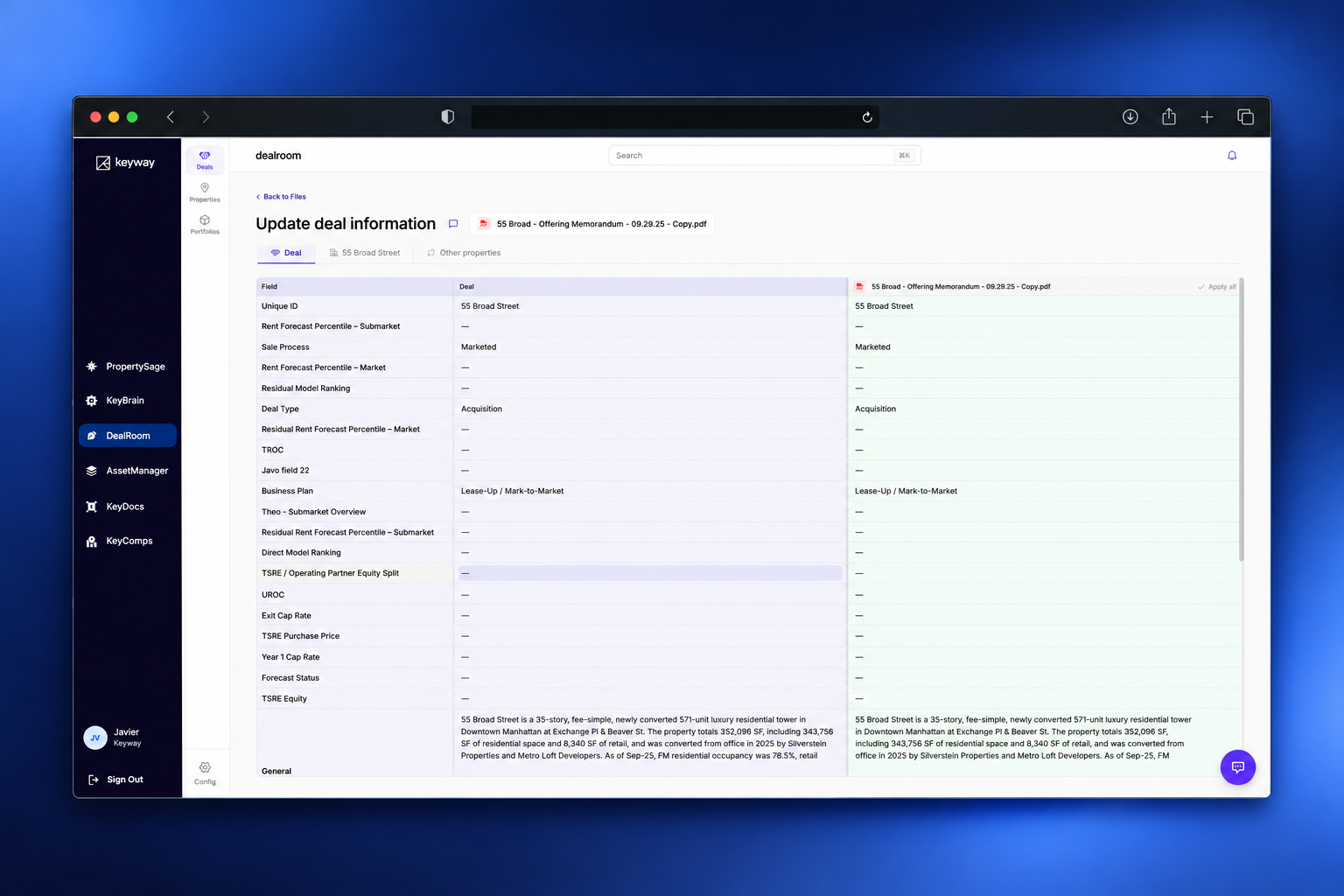
Take a lease amendment. Upload it to a Lease record, and KeyRoom identifies the relevant information, proposes field updates, and shows the source document, page, and passage behind each one. Your team reviews and approves the changes before they become part of the record.
A process that can take 45 minutes becomes a two-minute review, with the source and audit trail attached.
The same idea extends across workflows. Upload a new T12, for example, and KeyRoom can record it against the asset, calculate variance to budget, and feed that information into monthly reporting.
Because that context stays connected, KeyRoom’s AI agent doesn’t start from a blank prompt. It works from the information already attached to a deal, property, lease, or other record to answer questions, create tables and summaries, generate outputs, and move work forward.
Your team stays in control, while KeyRoom handles the complexity behind the scenes — helping teams operate faster and more efficiently without changing the way they already work.