
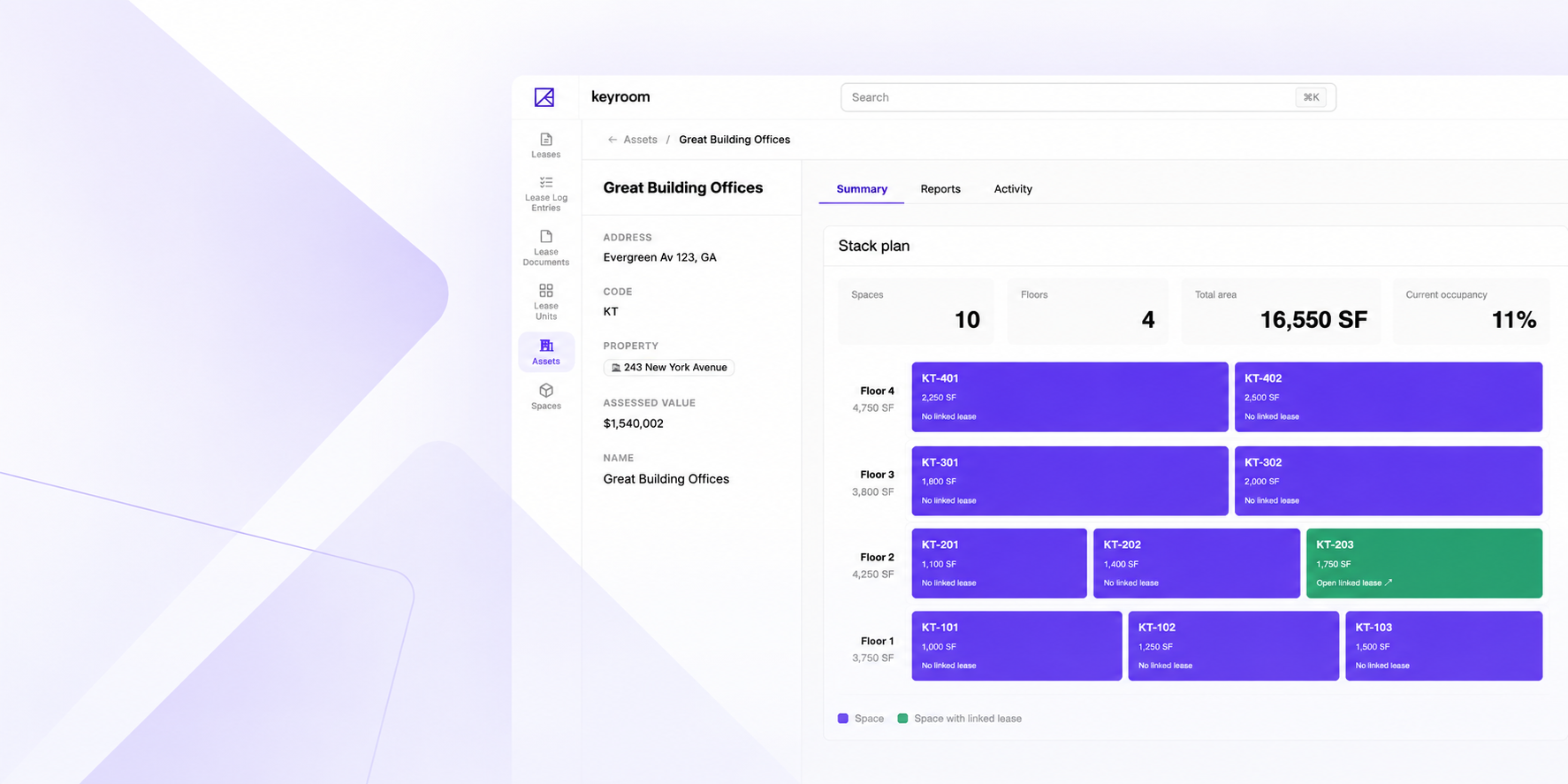
A commercial lease amendment arrives. It extends the lease term, introduces three months of base rent abatement, and leaves operating expense reimbursements unchanged.
The lease administration team needs to update the abstract. Accounting needs the correct charges. An asset manager wants to understand the impact on NOI.
All three depend on the same lease terms, but each needs to use them differently. The challenge is carrying accurate, consistent information from the original documents into the work that follows.
With Keyway, AI-powered lease abstraction helps teams turn that information into reliable, actionable data that supports workflows well beyond the initial extraction.
A reliable abstraction needs to consider the original lease and its amendments together. An amendment may modify certain provisions while leaving others intact.
In our example, the revised abstract must capture the extended term and rent concession without losing the operating expense obligations that remain in effect.
With Keyway, teams can process these documents together, whether through manual uploads or configured connections to document repositories.
Extracted fields can include references to their supporting sources and confidence indicators, allowing reviewers to inspect the underlying language and identify areas requiring closer attention.
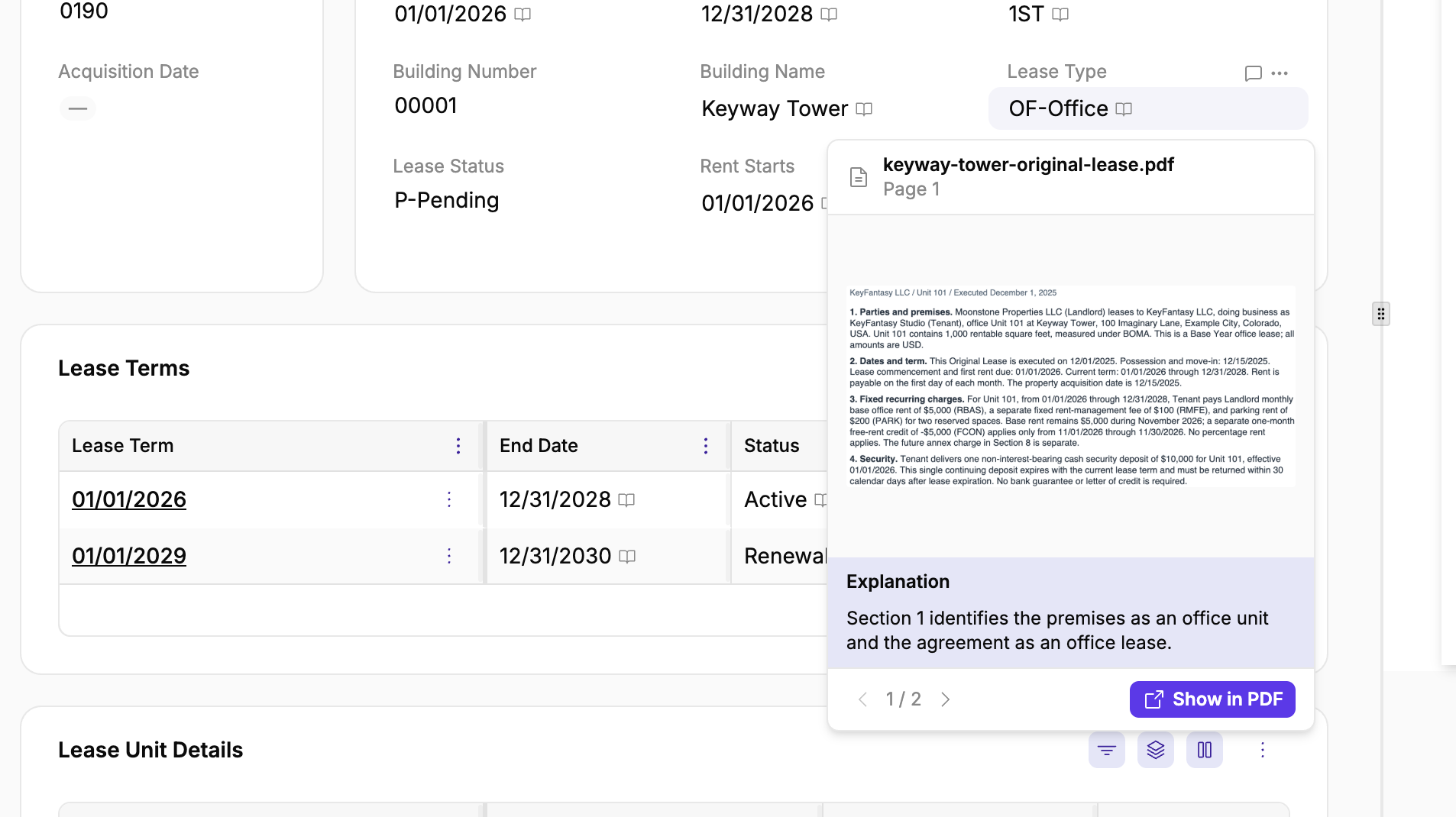
For the lease administrator, this means verifying that the concession applies only to base rent, rather than assuming all recurring charges have been waived.
Correctly interpreting a lease provision is only part of the process. The extracted terms must also align with the company's operating and accounting conventions.
Consider the rent abatement in our example. One organization may represent it as a zero-rent period, while another records contractual rent with a separate abatement credit. Operating expense reimbursements must remain separate in either case.
These distinctions affect charge codes, dates, and how the lease is represented in accounting records.
Keyway can map extracted lease terms to customer-specific accounting conventions, including lease identifiers, charge codes, and other required fields. This helps teams prepare structured information for use in their existing property management and accounting workflows.
This allows professionals to produce structured outputs that fit their existing processes, reducing the need to reinterpret or reformat the same terms at each handoff.
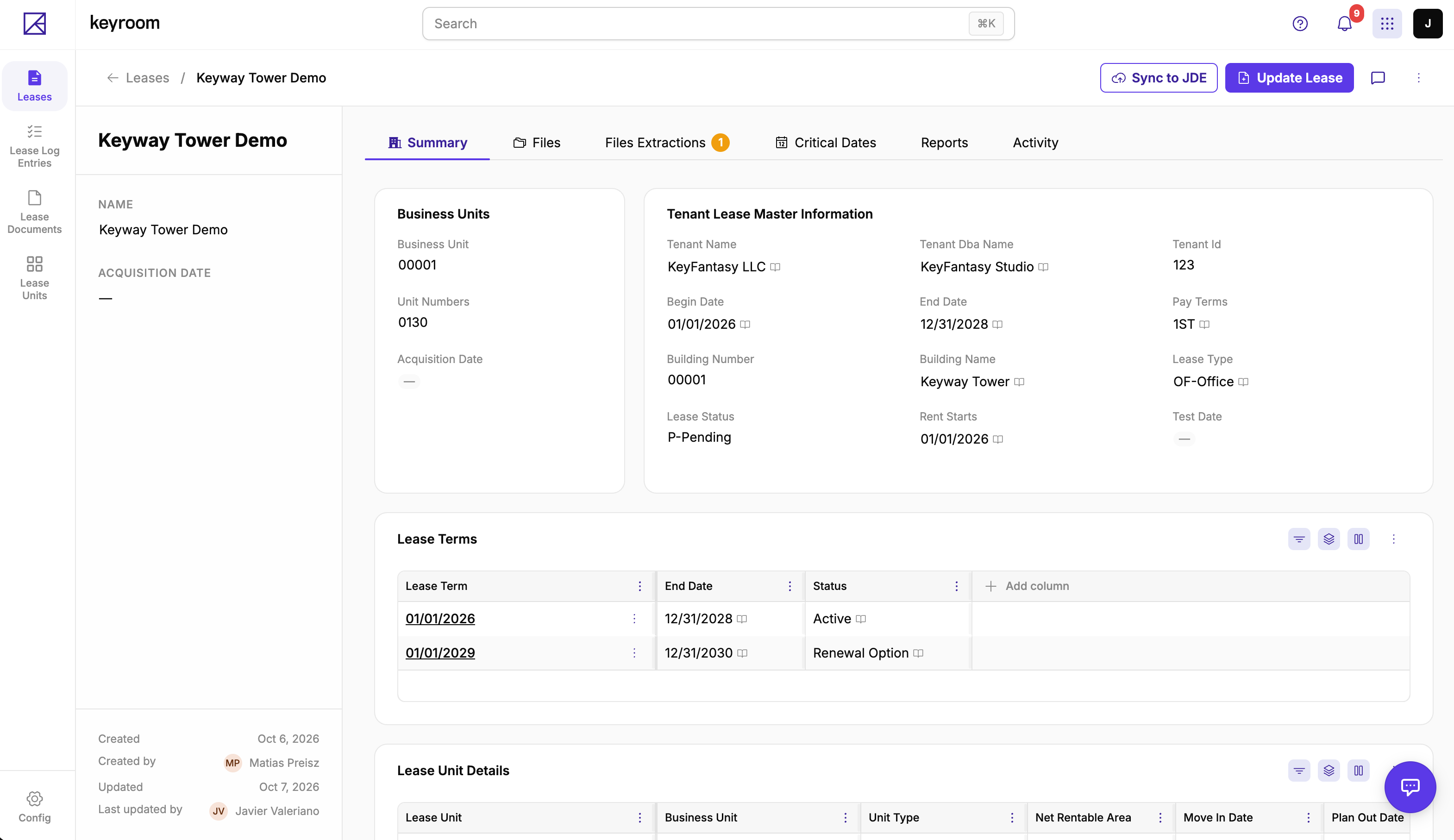
Human review is particularly important when lease language is ambiguous or has financial implications.
Suppose a reviewer notices that the abatement was incorrectly applied to every recurring charge, including operating expense reimbursements.
With Keyway, teams can correct extracted fields, refine workflow instructions, and test those changes against a golden set of previously reviewed examples. This helps improve consistency across future abstractions while preserving the ability to review each lease against its original contractual language.
Once the amendment has been reviewed, its value extends beyond the updated abstract.
A lease administrator might ask, “Which charges remain payable during the abatement period?” An asset manager might request a summary of how the amendment affects the lease schedule.
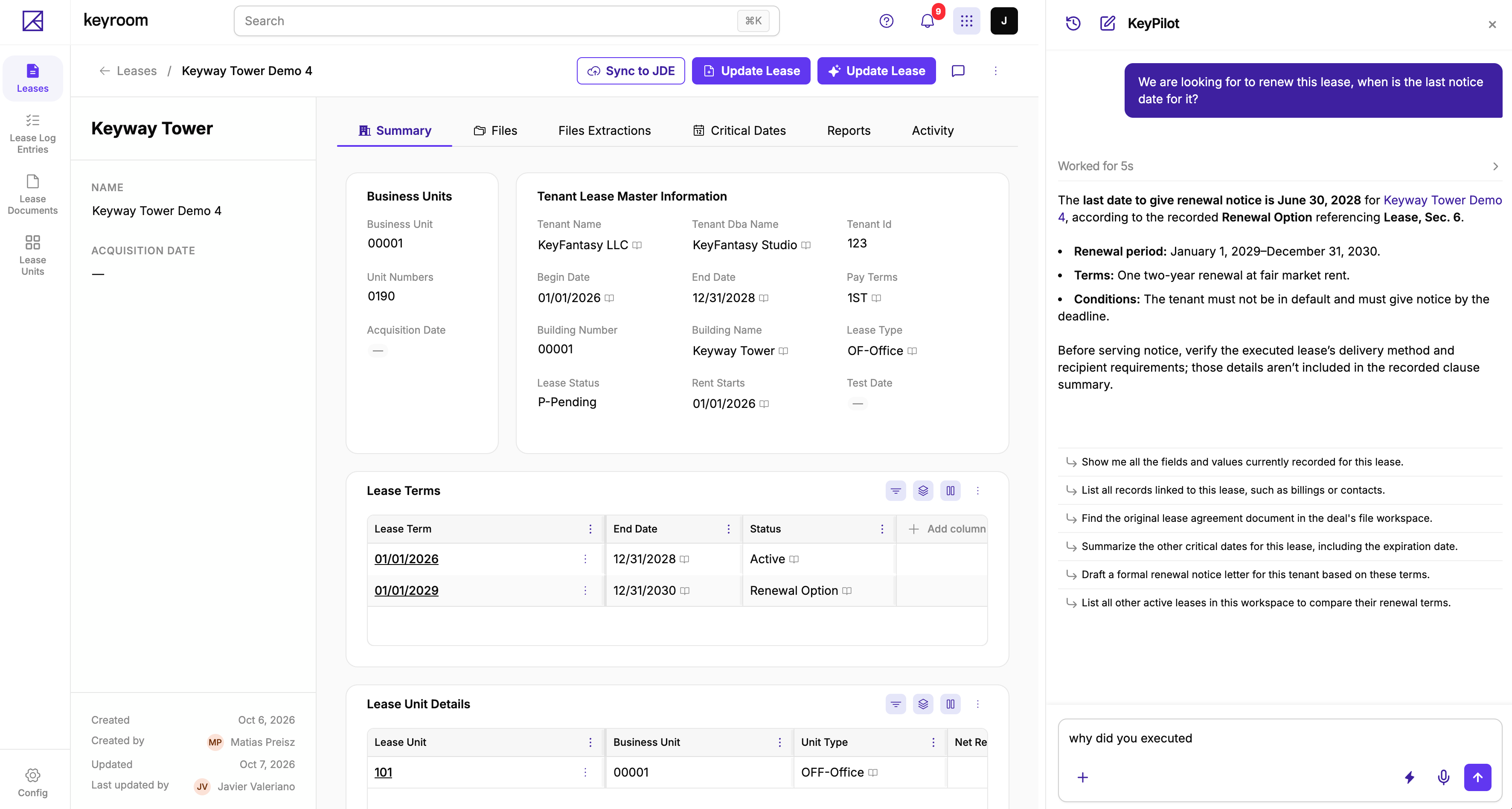
Keyway's conversational capabilities allow teams to explore supporting documents, refine extracted values or instructions, and generate reports using the information already captured.Reviewed results can be delivered through configured Excel or CSV outputs, connected to KeyRoom, or shared with external systems through supported, authorized integrations.
As more leases are processed, that structured information becomes increasingly valuable at the portfolio level. Asset managers can identify upcoming rent abatements, compare lease obligations across properties, and understand how contractual changes may affect future income. For example: “Which leases in this portfolio have base rent abatements next quarter, and what other charges remain payable?”
Instead of starting another manual review, the asset manager can work with previously extracted information and inspect the sources behind the results.
A lease abstract becomes more valuable when its information can support the work that follows. By turning complex lease documents into structured, reviewable data, teams can maintain consistency across accounting and operations while giving asset managers better visibility into their portfolios.
The real value of lease abstraction lies in what teams can do with the information next.
Bring a representative commercial lease package, an amendment, and the output your team needs, and see how Keyway can turn lease abstraction into a connected workflow.