

Commercial real estate teams have traditionally relied on occupancy as a core performance metric. When occupancy is high, investors and lenders feel confident. However, when vacancies rise, cash flow and valuations come under pressure. However, occupancy alone no longer gives a complete picture of property health. A building may appear full in a financial report, but occupancy may still be deteriorating. This hidden exposure is known as shadow vacancy, and it is becoming one of the most important indicators for real estate teams to monitor.
Shadow vacancy refers to tenants who technically occupy a space but are not using it productively or are unlikely to renew. These tenants may be downsizing, struggling financially, or operating on reduced staffing levels. Their continued presence masks real risk, leading investors, asset managers, and lenders to overestimate stability. Therefore, shadow vacancy is one of the top threats within commercial real estate if not managed properly.
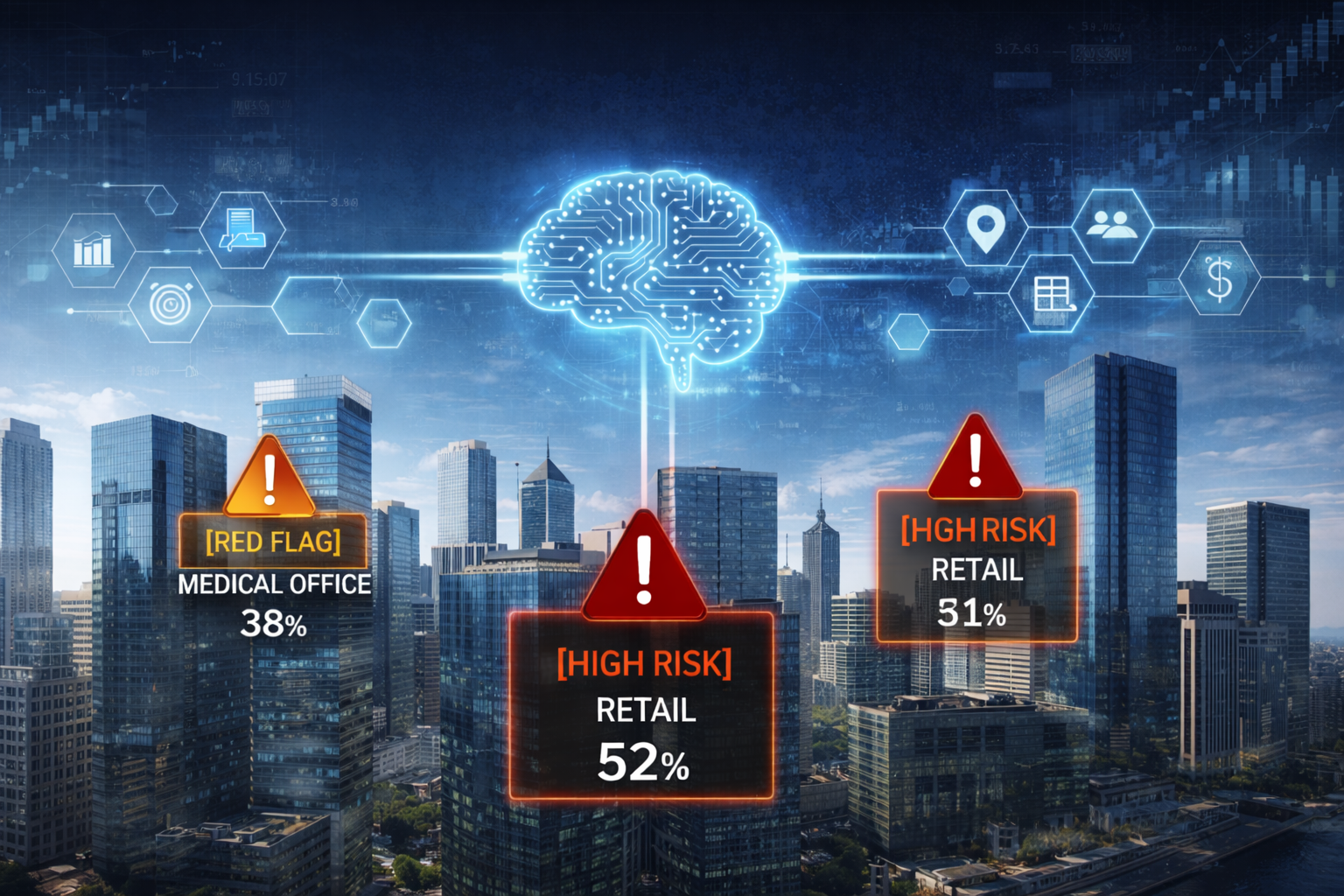
AI offers a more accurate way to detect these potential threats in advance by analyzing tenant behavior, market trends, and lease-level details. This article explains what shadow vacancy is, why it matters, and how AI helps uncover shadow vacancy before it affects value.
What Shadow Vacancy Means in Commercial Real Estate
Shadow vacancy describes the gap between reported occupancy and practical occupancy. Tenants appear in the rent roll, but their commitment to staying is relatively low. For example, a tenant may have signed a long lease but begun reducing staff and operations. Another tenant may be paying rent but struggling financially or planning to reduce their real estate footprint quietly when their lease ends.
Shadow vacancy is not visible through traditional reporting—so, a building may appear stable when future may be at risk. If an investor buys a property assuming high renewal probability, undiscovered shadow vacancy can lead to sudden revenue losses and unplanned capital needs. In a market where demand and capital availability fluctuate, spotting early signs of trouble is essential. However, due to information asymmetry, real estate buyers may get burned if they don’t conduct proper due diligence.
How AI Detects Shadow Vacancy
Traditionally, real estate teams have relied on property tours, tenant conversations, and financial statements to assess tenant stability. These methods can be helpful, but they lack consistency and scale. Similarly, a manual review of leases offers limited insight because a lease shows what a tenant is obligated to do, not what they intend to do. Rent rolls show who pays rent today, not whether they can or will continue paying.
Shadow vacancy shows up through small signals such as declining headcount, fewer visitors, reduced usage of utilities, or shifts in industry performance. Human teams cannot track these signals across dozens or hundreds of tenants, but AI can.
AI identifies patterns that indicate when a tenant is likely to vacate, downsize, or default. These insights come from both internal data and public data, structured into clear outputs for asset managers, investors, lenders, and property managers. For example, AI tools can evaluate past payment history, late rent trends, and communications between property managers and tenants. A building where tenants have started requesting more short-term concessions or extensions may be at higher risk. If a tenant repeatedly falls behind, even by small amounts, AI can weigh that pattern against its historical models to generate a risk signal.
With external, public data, AI can analyze employment trends in the tenant’s industry, local business closures, hiring slowdowns, or declining credit signals. For example, if the tenant operates in a sector that is contracting or has public financial stress signals, the likelihood of shadow vacancy rises. Tools like KeyDocs can extract renewal options, termination rights, and expansion or contraction clauses from leases. A tenant with a right to downsize or exit early may be more likely to do so if market conditions worsen. AI can combine these lease insights with market-level signals to flag tenants who appear to be occupying space today but may soon leave.
Portfolio-Level Exposure For Asset Managers
AI can also highlight shadow vacancy exposure across an entire portfolio. A single tenant in distress may be manageable, but a portfolio with several tenants shrinking operations simultaneously presents a deeper problem for an asset manager.
AI clarifies how much of a portfolio’s income is tied to tenants with declining usage patterns or industry-level risk. If a portfolio is heavily exposed to a shrinking sector, such as certain segments of retail or office, the probability of shadow vacancy increases. Tools that centralize market data and tenant behavior analytics, such as KeyBrain andKeyComps, can show whether a building’s rent levels are aligned with current demand. If the local market is softening and tenants appear less committed to their space, AI can combine these insights to estimate rollover risk more accurately. Asset managers can use these insights to adjust leasing strategies, accelerate negotiations, or shift capital plans to reduce exposure.
How to Manage and Mitigate Shadow Vacancy Risk
Instead of reacting to unexpected vacancy after renewal negotiations fail, AI can help real estate decision-makers plan proactively.
Once AI identifies shadow vacancy, real estate teams can act early. Property managers may engage tenants sooner to understand their plans. Offering modified lease terms, flexible space, or early renewal incentives can stabilize occupancy before a tenant decides to leave.
Asset managers can update hold-sell decisions based on risk signals. If shadow vacancy is concentrated in a single building, selling earlier or repositioning the space may be prudent. Lenders also benefit from visibility into shadow vacancy, as it enhances credit risk assessment and loan monitoring.
Conclusion
Traditional occupancy metrics overlook the early warning signs that tenants may be preparing to leave. As such, reported occupancy rates often fail to reflect true market exposure. Shadow vacancy fills that gap by measuring occupancy quality rather than occupancy quantity. AI helps close this gap by analyzing tenant behavior, market signals, lease obligations, and operational activity in real time. This gives investors and lenders a more accurate understanding of property performance, which improves underwriting, forecasting, and exit strategies. By understanding shadow vacancy and tracking it proactively, investors, lenders, asset managers, and property managers gain a clearer picture of risk. Therefore, they can protect income, improve valuations, and make better strategic decisions.







.jpg)